Ayurveda courses
Learn Ayurveda, from your home all the way to Kerala
Two online levels with Françoise Barrios to learn the foundations and then the Ayurvedic assessment, and a month of practice in Kerala with Dr Shamna, the doctor of the Madhavi Ayurveda centre.
Level 1 — Introduction, online · Level 2 — Practitioner Masterclass, online · Hands-on course in Kerala
Three courses
Start at home, go further, practise in India
Two online levels with Françoise Barrios — the foundations, then the Ayurvedic assessment — and a month in Kerala with Dr Shamna to learn the main treatments.
Level 1 · Foundation
Introduction to Ayurveda, online
Live, over one weekend (16 h), in French · With Françoise Barrios
Fourteen chapters to lay the foundations: elements, doshas, constitution, digestion, diet and lifestyle. Françoise Barrios, clinical psychologist and Ayurvedic practitioner trained in Kerala, has already taught this course at the Yogsansara school.
Dates and fee: on request.
See the programmeDownload the brochure (PDF, in French)Level 2 · Advanced
Ayurveda Practitioner Masterclass, online
Online over three months (42 h), final assessment in Geneva · With Françoise Barrios
Fourteen three-hour modules to learn and deepen the Ayurvedic assessment: observation, case history, tongue, pulse, reading imbalances and advice on nutrition and lifestyle, up to case studies.
After Level 1 or an equivalent course. Dates and fee: on request.
See the programmeDownload the brochure (PDF, in French)Hands-on course · In Kerala
A one-month course in Kerala
At the Madhavi Ayurveda centre, Kerala · With Dr Shamna
60 hours of theory and practice in a working treatment centre, to learn the main Ayurvedic treatments with Dr Shamna.
Accommodation at the centre and full board included. Dates and fee: in the brochure.
Discover the programmeDownload the brochure (PDF, in French)Level 1 · The programme
Introduction to Ayurveda
One weekend in a virtual classroom, live with Françoise Barrios: the foundations of Ayurveda, from its history to its everyday use. Self-observation exercises punctuate the chapters.
- live, over one weekend
- 16 h
- live, over one weekend
- chapters
- 14
- chapters
- from home, camera on
- Online
- from home, camera on
- 1
Introduction to Ayurveda
Definition, origin and history; philosophy; core principles; health according to Ayurveda.
- 2
The five elements and the three doshas
Space, air, fire, water, earth; Vata, Pitta, Kapha: characteristics, manifestations and role in the body's balance.
- 3
Individual constitutions (Prakriti)
Determining your Prakriti; dosha combinations; impact on health and well-being.
- 4
The sub-doshas
The five sub-doshas of Vata, Pitta and Kapha: functions and related imbalances.
- 5
The seven dhatus
Rasa, Rakta, Mamsa, Meda, Asthi, Majja, Shukra: the role of the tissues in health.
- 6
The concept of Agni
The importance of Agni and digestion; the different Agnis.
- 7
Ojas, the elixir of vitality
How Ojas forms and what it does; strengthening it through diet, lifestyle and Ayurvedic practices.
- 8
Ayurvedic nutrition
The six tastes (Rasa); a diet suited to each constitution; preparing meals.
- 9
Natural Ayurvedic remedies
Herbs, spices and materia medica; precautions and advice for use.
- 10
Healthy daily habits
Morning (Dinacharya) and evening (Ratricharya) routines; bringing them into everyday life.
- 11
Ayurveda and the seasons
How the seasons influence the balance of the doshas.
- 12
Putting it into practice
A healthy home environment; exercise, sleep and relationships; preventing imbalances.
- 13
Manas, the mind and mental balance
The mind according to Ayurveda and its impact on health; links with yoga and meditation.
- 14
Purification rituals (Panchakarma)
The concept of purification; Vamana, Virechana, Basti, Nasya, Raktamokshana; the Ayurvedic cure.
Open to anyone curious about Ayurveda. A final online quiz closes the weekend; therapists and health professionals receive a certificate of the hours attended.
Level 2 · The programme
Ayurveda Practitioner Masterclass
The advanced module, to move from the foundations to the Ayurvedic assessment: observing, questioning, reading the tongue and pulse, spotting imbalances and giving suitable lifestyle advice. The modules are spread over three months to leave time to practise between sessions.
- 14 modules of 3 h
- 42 h
- 14 modules of 3 h
- live, online
- 3 months
- live, online
- final assessment in person
- Geneva
- final assessment in person
- 1
Introduction
Overview of the programme; review of the foundations (doshas, gunas, Trayopastambha); self-assessment of your constitution.
- 2
The therapeutic setting — Ayurveda, a sacred medicine
Preparing the treatment room and the therapist; welcoming the patient; observing the doshas (skin, hair, eyes, nails, gait, posture).
- 3
Trividha Pariksha
The three ways of assessment: observation, touch (including the pulse) and questioning; the five stages of Pancha Nidana.
- 4
The Ayurvedic case history — Ashtavidha Pariksha
The eight-point examination; Samprapti and Shatkriyakala illustrated with cases.
- 5
Reading the tongue, nails and face
Mapping the tongue and face, reading the nails; link with Vikriti; exercises on photographs.
- 6
Identifying imbalances (Vikriti)
Prakriti and Vikriti; physical and mental signs of Vata, Pitta and Kapha; Sattva, Rajas, Tamas; gathering information.
- 7
Agni, the digestive fire
The types of Agni (Sama, Vishama, Tikshna, Manda); Ama; assessing your own Agni.
- 8
The patient's diet
A diet suited to each dosha and to the individual; the eight factors; seasonal diets; mind-body influence.
- 9
Dinacharya — daily routines
Routines according to the doshas (waking, hygiene, abhyanga, exercise, meals, sleep); Ritucharya; creating personalised routines.
- 10
Stress management and relaxation techniques
An Ayurvedic reading of stress; breathing, relaxation, meditation, sleep hygiene; the place of yoga.
- 11
Correcting imbalances with Ayurvedic remedies
Principles of panchakarma; materia medica — 20 key plants and 12 key spices; precautions and contraindications.
- 12
Pulse reading (Nadi) and the Rugna Patrakam
Reading the pulse of Vata, Pitta and Kapha; keeping the patient record; self-palpation exercises.
- 13
Final practical workshop — case studies
Live analysis of volunteers' cases; full assessment in small groups; questions and answers.
- 14
Knowledge assessment and closing — in Geneva
Written questions, case study and practical demonstration (tongue, pulse, patient record); course review.
For people who have completed Level 1 or an equivalent Ayurveda course. Continuous assessment online, then a final assessment in Geneva; a certificate of completion is awarded. This is continuing education: it confers no title and does not authorise diagnosis.
In Kerala · Why here
Learn in a real place of care
In Kerala, Ayurveda is not a trend: it is a living medicine, passed on from teacher to student. Dr Shamna shares her knowledge in that spirit.
- of training
- 60 h
- of training
- 25 days of classes
- 1 month
- 25 days of classes
- modules, from theory to practice
- 12
- modules, from theory to practice
- traditional treatments practised
- 15+
- traditional treatments practised
A doctor as your teacher
Dr Shamna, a qualified Ayurvedic doctor (BAMS), has already taught at the Anjali Centre in Kannur, where Françoise Barrios was her student.
A working centre
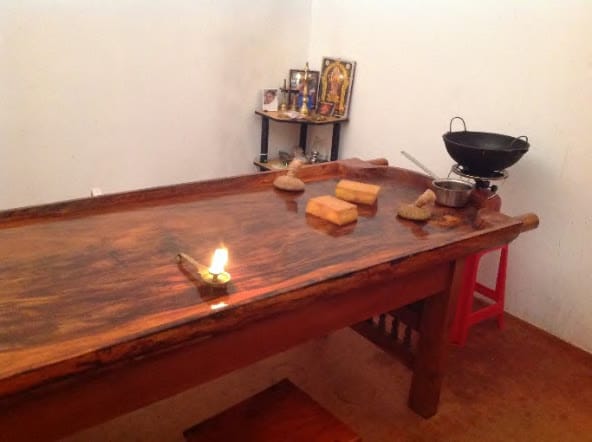
You learn in the treatment rooms where our guests are cared for, with the oils, powders and instruments used every day.
Theory in the service of practice
Doshas, constitution, elements, digestion: you understand why each treatment is done this way, with this oil, for this person.
Kerala as your classroom
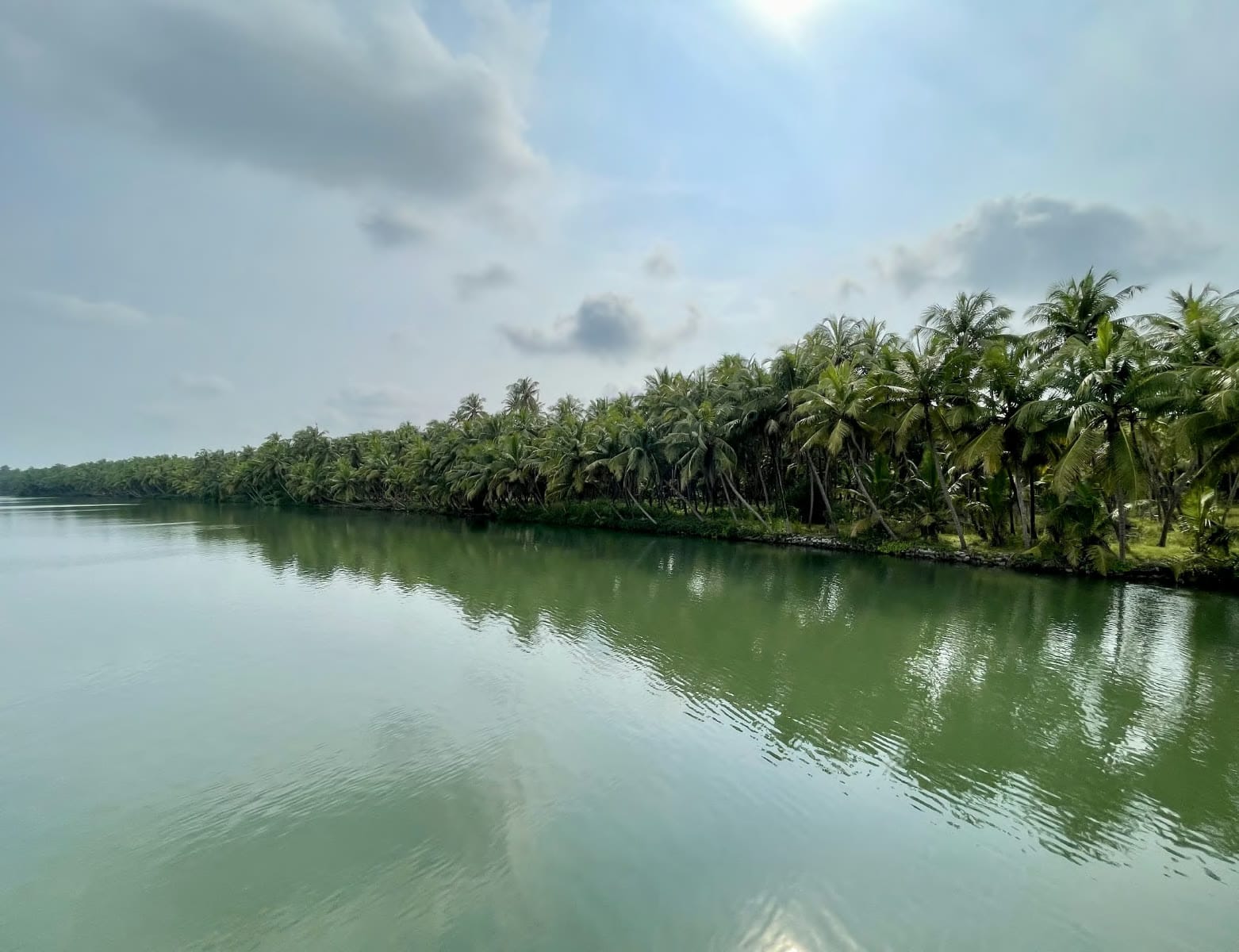
Between backwaters, coconut palms and the Arabian Sea, a month of immersion far from everyday life — to learn, but also to slow down.
Who it is for
This course is for you if…
- you are a massage therapist, wellness practitioner or therapist and want to enrich your practice with authentic Ayurvedic treatments;
- you have discovered Ayurveda — during a cure or through reading — and want to go further by understanding its principles;
- you dream of a month in Kerala that is both a training and a life experience.
Admission requirements and expected level: we discuss them together before you enrol.
In Kerala · The programme
Twelve modules, from the foundations to treatment protocols
A progression designed to connect knowledge and hands: first understand Ayurveda, then learn to prepare and give the treatments.
Understand
1Introduction to Ayurveda
- What makes it unique
- Its aims and objectives
- The notion of health
- 2History and philosophy of Ayurveda
3Core principles
- Pancha Mahabhuta — the five elements
- Tridosha — Vata, Pitta, Kapha
- Sapta Dhatu — the seven body tissues
- Mala — the body's waste products
- Agni — the digestive fire
- Koshta — the digestive tract
- Prakruti — the constitution and how to assess it
- Vikruti — the state of imbalance
- Ama — metabolic toxins
- 4Dinacharya — daily lifestyle
- 5Basics of Ayurvedic diet and nutrition
- 6Beauty and Ayurveda
- 7Basics of women's care in Ayurveda
- 8Plants and home remedies
- 9Panchakarma
- 10The most commonly used massage oils and products
- 11Basics of oil preparation
Practise
12
Body treatment protocols
The practical heart of the course: each treatment is demonstrated, explained, then practised under Dr Shamna's supervision.
Treatments taught ↓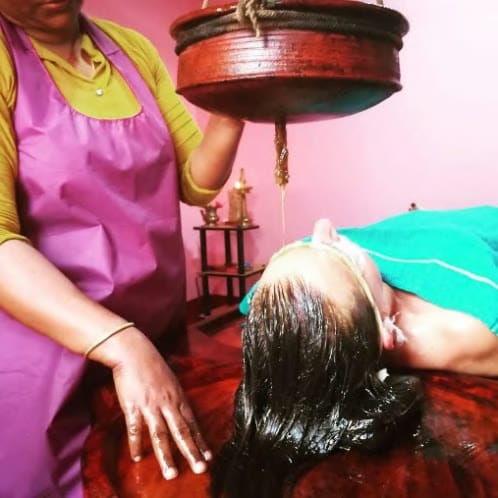
Treatments taught
The great treatments of Kerala, in your hands
Oil massages
- Abhyanga / Uzhichil — full-body massage with warm oil
- Mukha Abhyanga — face massage
- Shiro Abhyanga — head massage
- Shiromarma — massage of the marma points of the head
- Kayadhara — warm oil poured continuously over the body
Shirodhara & sweating
- Shirodhara — a continuous stream onto the forehead
- Tailadhara — with medicated oil
- Ksheeradhara — with medicated milk
- Swedana — sweating therapy with heat
Kizhi — warm herbal pouches
- Podikizhi — pouches of herbal powders
- Elakizhi — pouches of fresh leaves
- Navarakizhi — pouches of navara rice cooked in milk
- And other kizhis — following the centre's tradition
Specific treatments
- Udwarthanam — massage with dry powders
- Netra Vasti — eye treatment
- Karna Pooranam — ear treatment
- Nasya — nasal treatment
- Local treatments — targeted applications
Your teacher
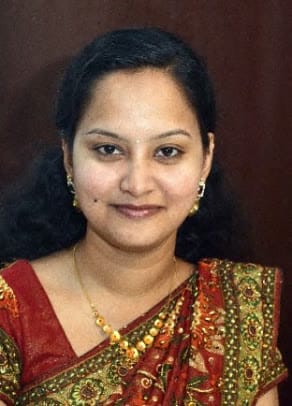
Dr Shamna
From the Kannur region and a graduate of Parassinikkadavu Ayurveda Medical College, she specialised in paediatrics and gynaecology. Doctor at the Madhavi Ayurveda centre, she was chief physician and teacher at the Anjali Centre in Kannur. She speaks English and is used to an international audience.
Your home for a month
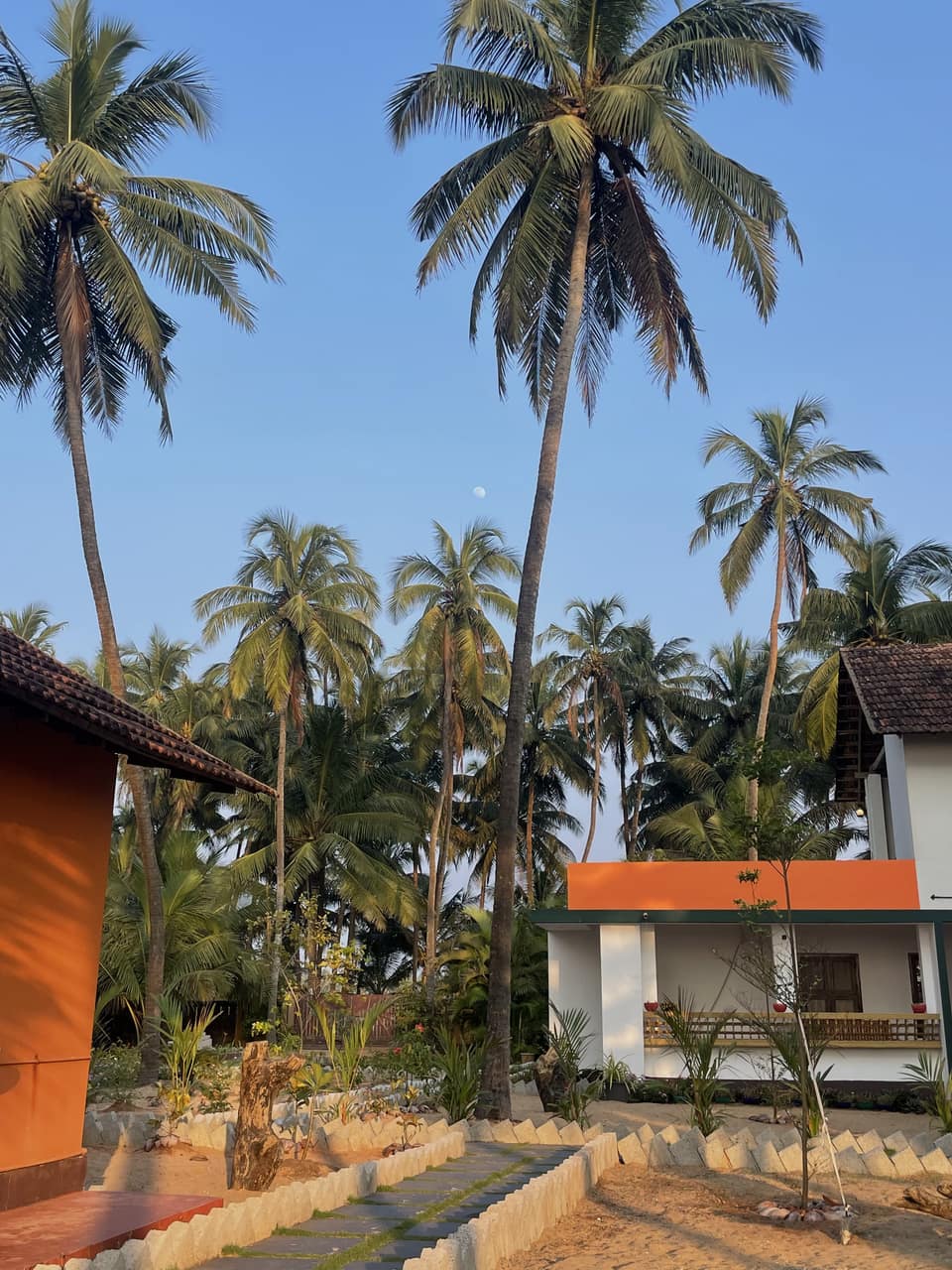
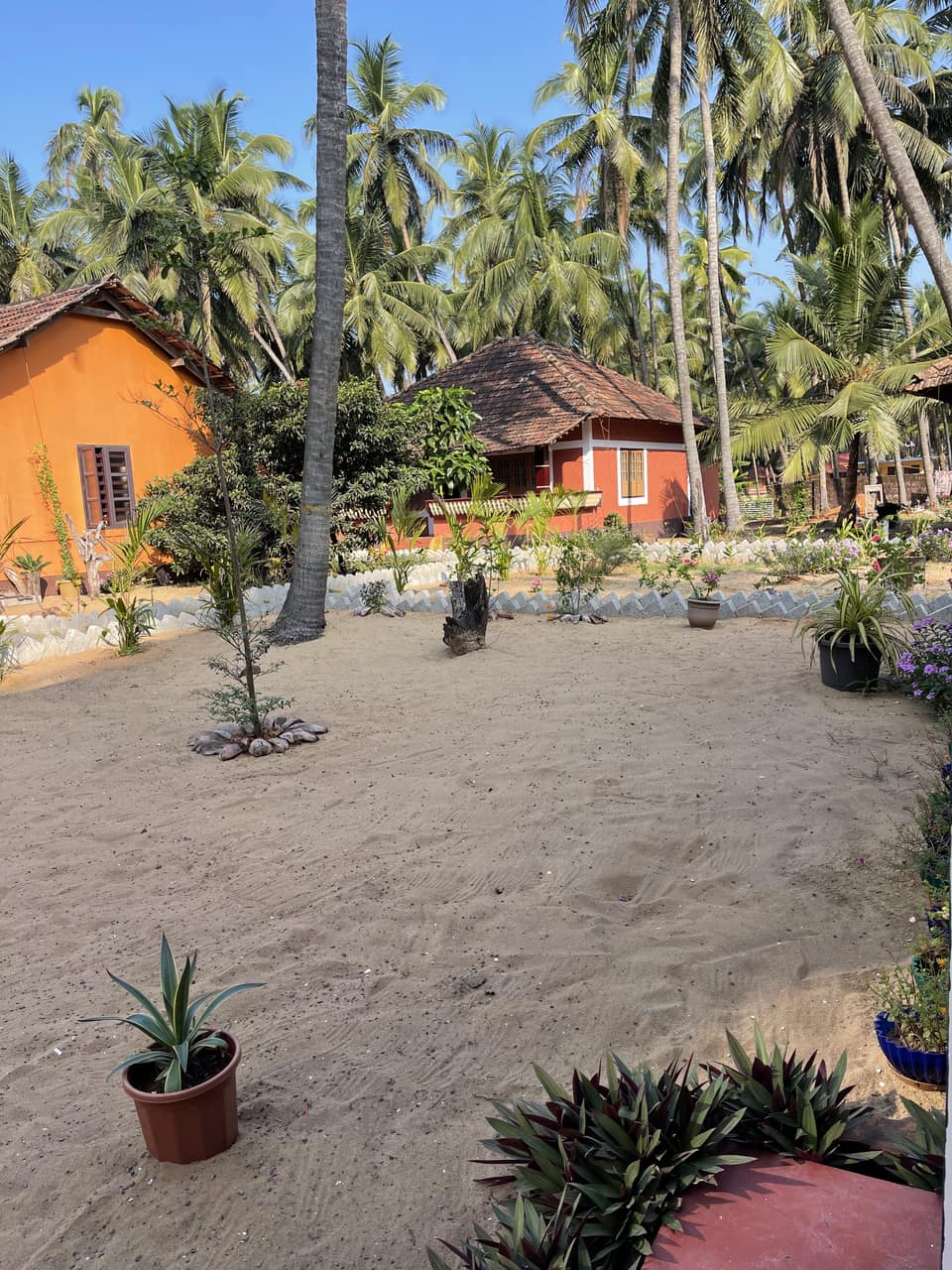
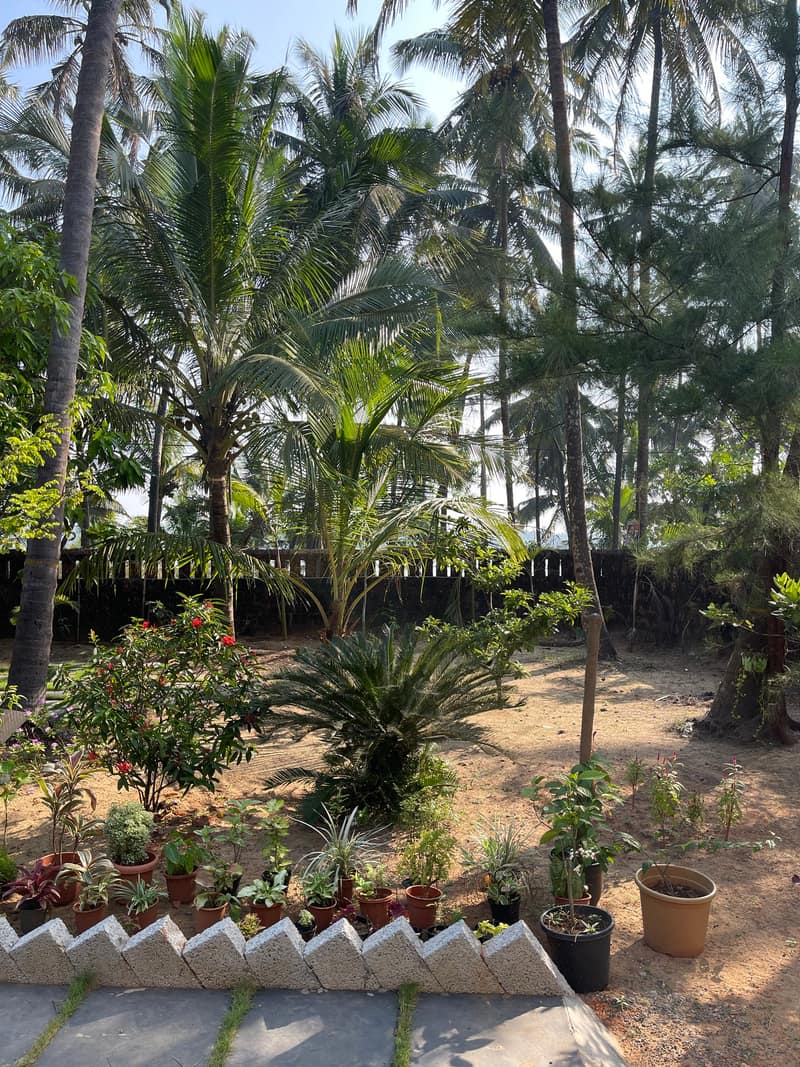
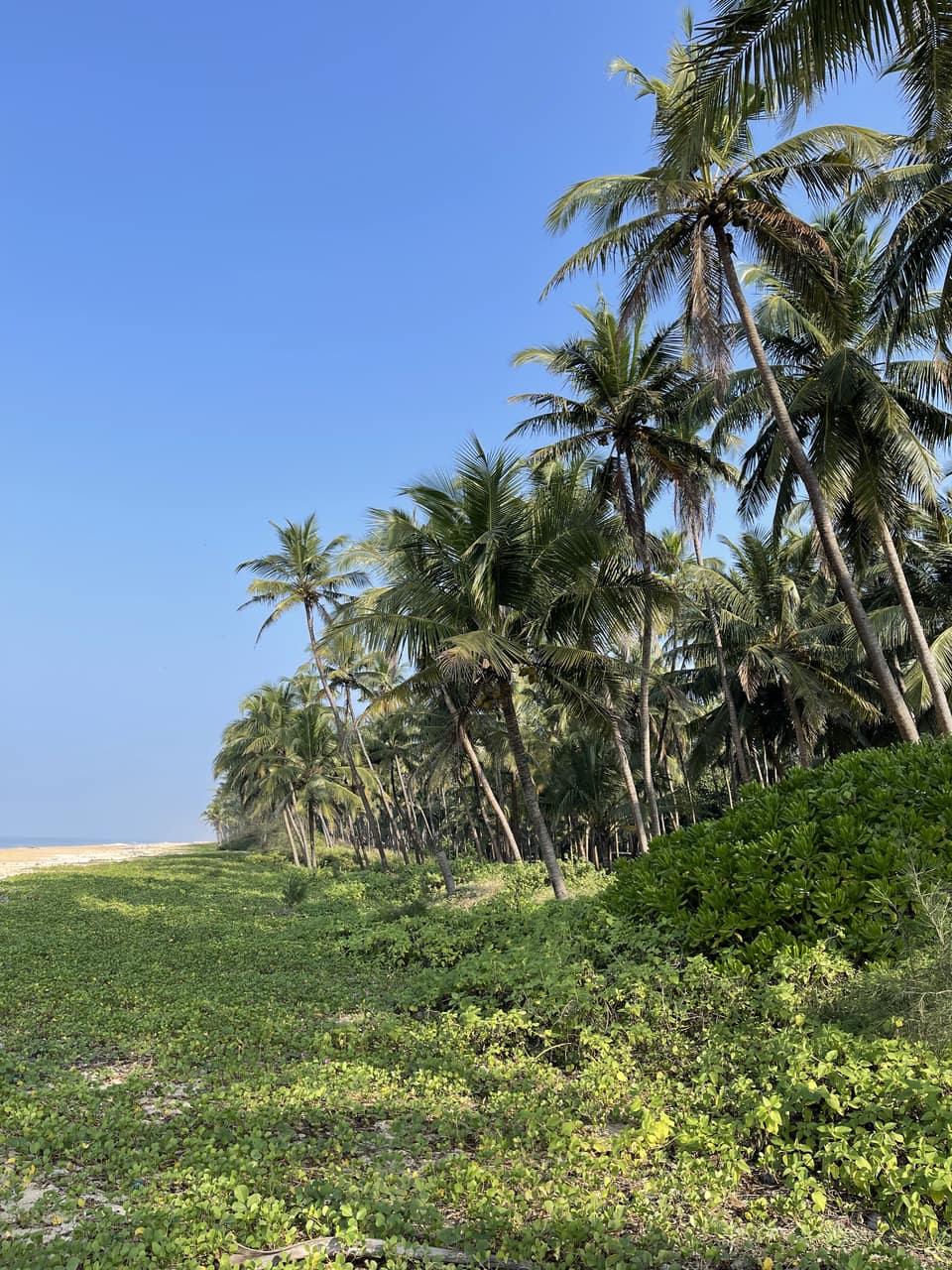
A centre between coconut palms and the Arabian Sea
Traditional Kerala houses, shady gardens, the beach a stone's throw away: between classes, the centre is a place to breathe and let what you learn settle.
In practice
Dates, fee, accommodation
Length
60 hours spread over one month, i.e. 25 days of classes.
Place
The Madhavi Ayurveda centre in Valiyaparamba, northern Kerala.
Next sessions
The dates of the next session are given in the brochure.
Accommodation
26 nights at the centre, in a standard room or a shared double room, with full board, for the whole length of the course.
All-inclusive package
Fee and dates: in the brochure
In a standard room or a shared double room.
- The full 60-hour course
- 26 nights at the centre
- Full board
Application
Apply for a course
Fill in this form: we will get back to you to confirm the dates, send you the detailed programme and finalise your enrolment. The request does not commit you to anything.

A question before you apply?
Write to us to receive the detailed programme and the next dates — or book a free first conversation to talk it over.
Your contact for the courses: Françoise Barrios
+41 78 601 20 51 · formations@madhaviayurveda.com