Excess Vata: symptoms and rebalancing according to Ayurveda
By Françoise Barrios

In today's hectic world, where stress and unpredictability reign supreme, many people suffer from anxiety, digestive problems and a general feeling of instability. According to Ayurveda, the age-old traditional medicine of India, these symptoms may be linked to an imbalance of the Vata dosha – the force of movement in the body. Rather than fighting this imbalance, Ayurveda offers a gentle, holistic approach to bring it back into balance by restoring a sense of safety, warmth and rhythm. Let us explore how to correct a displaced Vata to regain well-being and serenity.
Understanding excess Vata
In Ayurveda, Vata is responsible for movement, circulation and communication in the body. When it is displaced – often because of irregular habits, cold or mental stress – it can cause anxiety, palpitations, digestive problems and nervous fatigue. The ancient sages, such as those described in the classical texts, did not see this as an organic disease, but as a sign that the body has lost its grounding. Instead of confronting it head-on, the Ayurvedic approach is to create an environment that allows Vata to return naturally to its place. An exploratory study published in 2019 in the Journal of Evidence-Based Integrative Medicine in fact linked greater Vata imbalance with increased anxiety and rumination, and with reduced mindfulness and overall quality of life.
The 6 key points for correcting excess Vata
1 - Discipline in time: the first step towards stability
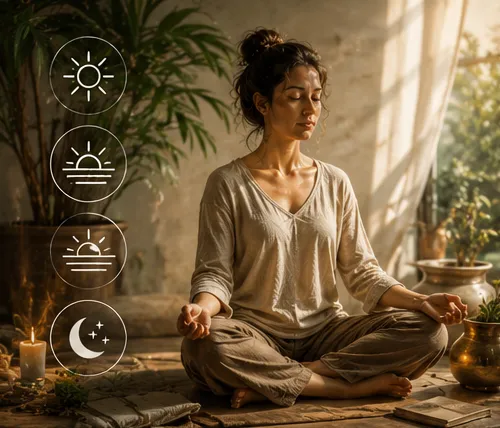
The first step in correcting an imbalanced Vata is to establish a strict, regular daily routine. Vata is fed by unpredictability — meals at varying times, irregular sleep, working late — which quickly makes the troubles worse. Ayurveda insists on fixed times for meals, rest and sleep. This allows the nervous system to relax, reducing anxiety, mental agitation and digestive disorders. By keeping to a stable schedule, your body regains a natural rhythm, like a well-oiled internal clock. Regularity is one of the most powerful remedies for Vata's instability.
2 - Thermal correction: restoring warmth

Vata is by nature cold, dry and light. Cold food, iced drinks, draughts and air-conditioned spaces accentuate its imbalance. To reverse this, favour warmth everywhere: have hot or warm food and drinks, wear warm clothes and choose well-heated spaces. This warmth reassures the body, signals that "survival" mode is over and encourages a gradual return to balance.
3 - Snehana: lubrication to ground Vata

One of the most effective therapies is snehana (internal and external lubrication). Vata dries out the tissues, joints and nerves; oil not only hydrates but, above all, lubricates deeply, nourishes the nervous system and stabilises prana. A daily massage with warm sesame oil, called abhyanga, is particularly recommended. It helps bring Vata "down" from the head and chest to its natural seat (the pelvis and colon). After such a massage, many people feel a deep calm — not only mental, but a real grounding in the body (this may be contraindicated when Pitta is high).
4 - Diet therapy: nourishing without rushing
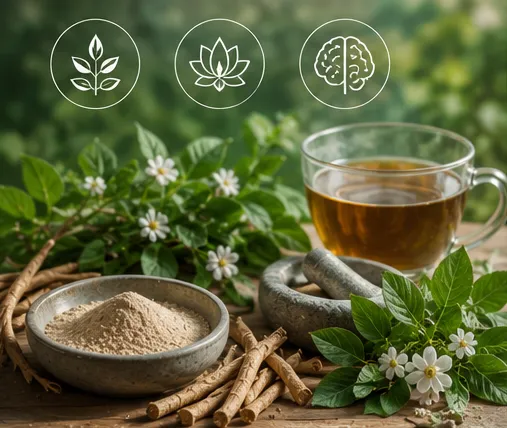
Excess Vata often comes from undereating, too strong a preference for "light" foods or mental overactivity. Ayurveda recommends warm, unctuous, nourishing and easily digested foods: hot soups, ghee (clarified butter), cooked grains (rice, oats, quinoa), root vegetables and slow-cooked dishes. These soft, heavy textures digest slowly and tell Vata there is no need to rush. Avoid as much as possible raw food, dry and crunchy snacks, cold drinks and prolonged fasting, which aggravate the imbalance.
5 - Breathwork: calming gently
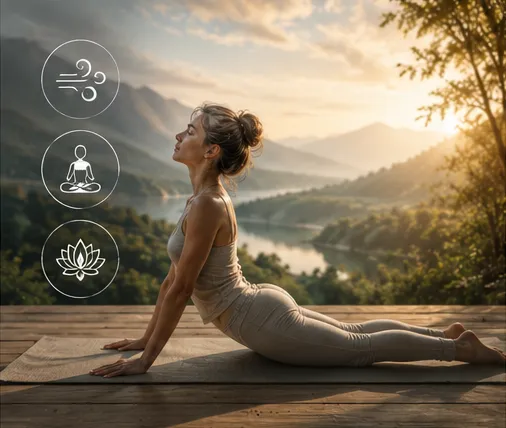
The breath is a powerful key for stabilising Vata, but always gently. Practise slow, even, deep breathing with long exhalations. This activates the parasympathetic system, slows the flow of thoughts and balances Prana Vata. At the same time, it is essential to ground Vata by supporting the downward movement of Apana Vata (the energy that governs elimination and stability in the lower body). Most people today live "up top" — in their heads, on screens, in rumination.
To come back down:
- Encourage regular elimination (going to the toilet at fixed times)
- Do gentle squats, walk barefoot on earth or grass
- Have early, light dinners
- Spend time on body awareness of the pelvis and legs
When the breath becomes fluid and the energy moves downwards, the mind calms down naturally.
6 - Correcting sleep: essential and non-negotiable
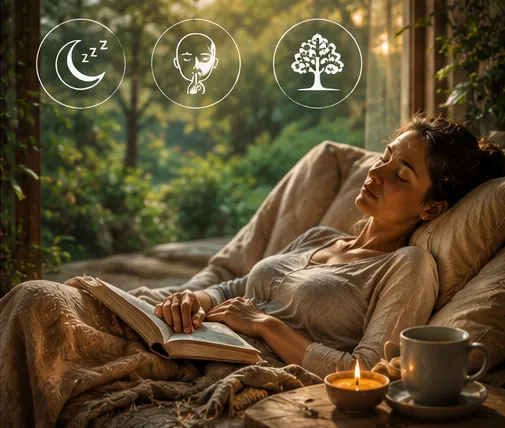
Late nights and going to bed after 10–11 pm greatly raise Vata in the nervous system. Ayurveda recommends going to bed before 10 pm, not out of rigidity, but to allow Vata to rest deeply during the most restorative part of the night. Good-quality, regular and sufficient sleep is the ultimate medicine for lasting balance. Combine it with a soothing evening ritual (a light abhyanga, a hot herbal tea, avoiding screens) to make the most of it.
Extra tips for better results
- Start with the first two points (routine + warmth): they quickly create a foundation of stability.
- Abhyanga and nourishing food are often the most transformative for imbalanced Vata.
- Be gentle with yourself: Vata likes neither force nor haste. Gradual, consistent changes give the best results.
Conclusion: Vata as a call for grounding
Excess Vata is not a flaw, but a call for grounding. By nourishing the body with predictability, warmth and nutrition, Vata naturally returns to its place. The results? Pain that settles, normalised digestion, deeper breathing and an effortlessly calmer mind. Bring these practices into your daily life for holistic health.
Please note, however, that when the doshas are out of balance it is always best to consult an expert so that treatments can be properly adapted.
For more Ayurvedic wisdom, join our online community , contact me for an Ayurvedic consultation, personalised support or to plan a panchakarma cure in India.
Do you recognise these Vata symptoms in yourself? Françoise Barrios offers a personalised Ayurvedic consultation in Geneva to identify your constitution and restore balance.
Book an appointment →
Namaste
Françoise Barrios