Burn-out and exhaustion: the Ayurvedic approach and Panchakarma
By Françoise Barrios

What Ayurveda understands that modern medicine still overlooks.
In Switzerland, one working person in four says they suffer from burn-out. Yet once the medical tests have been done — often with no visible abnormality — many leave without a satisfying answer. Ayurveda, a 5,000-year-old Indian system of medicine, offers a different reading and therapeutic tools that work at the root of the problem.
1. Burn-out as seen by Ayurveda: a break in the vital balance
Before trying to heal burn-out, Ayurveda seeks to understand it as a whole. For this medicine, occupational exhaustion is not simply a psychological or hormonal problem: it is the sign of a deep imbalance of the doshas, the vital forces that govern our entire physiology and psyche.
The central role of Vata in exhaustion
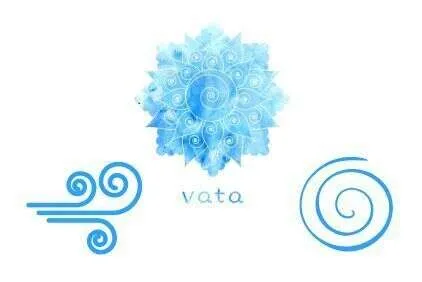
The Vata dosha — associated with movement, wind and the nervous system — is systematically disturbed in cases of burn-out. An intense working life, irregular hours, lack of sleep, digital overstimulation: all these factors aggravate Vata. When it runs away with itself, it depletes the deep tissues (dhatus) and affects Ojas first of all — the vital essence, our fundamental vitality.
A drop in Ojas shows up as symptoms that match modern burn-out point for point:
- Deep fatigue despite rest
- A feeling of inner emptiness or disconnection
- Greater susceptibility to infections
- Sleep problems (difficulty falling asleep or waking at night)
- Diffuse anxiety, irritability or emotional indifference
- Loss of motivation and meaning
2. Why rest alone is not enough
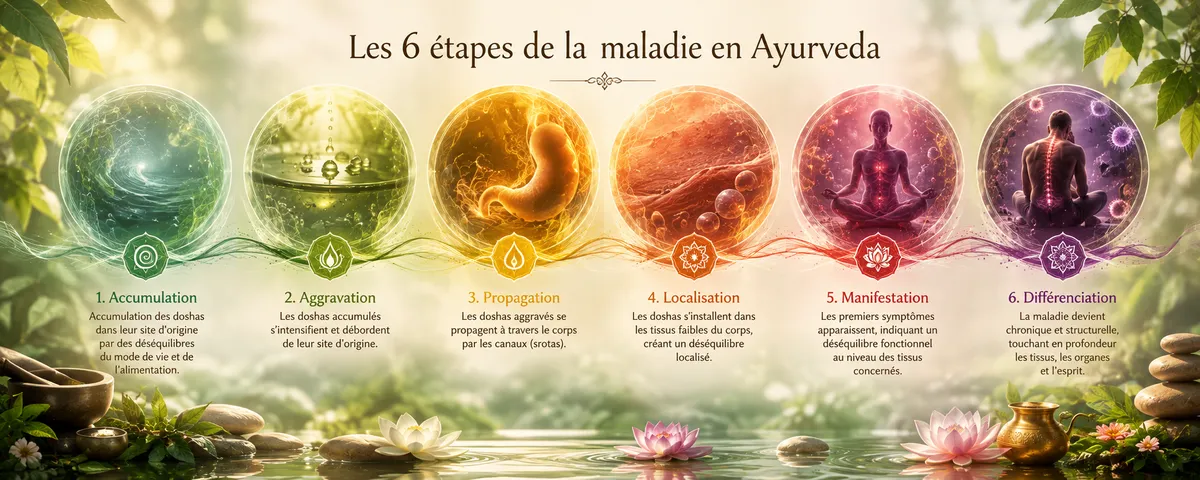
It is one of the most common frustrations of people in burn-out: they rest, sometimes for weeks, and do not really recover. Ayurveda explains this through the concept of sama — the build-up of toxins (ama) in the deep tissues.
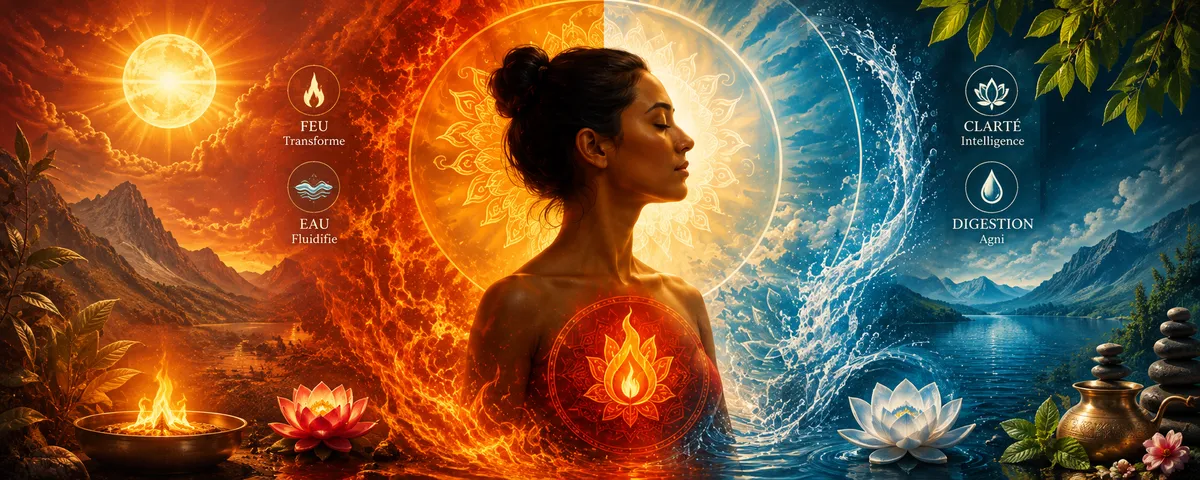
When the body is exhausted, the digestive fire (agni) weakens. Food, emotions and experiences are no longer properly "digested". Residues build up in the body's subtle channels (srotas), blocking the flow of energy and nutrients. Rest gives a pause, but it does not remove these blockages. This is precisely where Panchakarma comes in.
3. Panchakarma: deep purification therapy
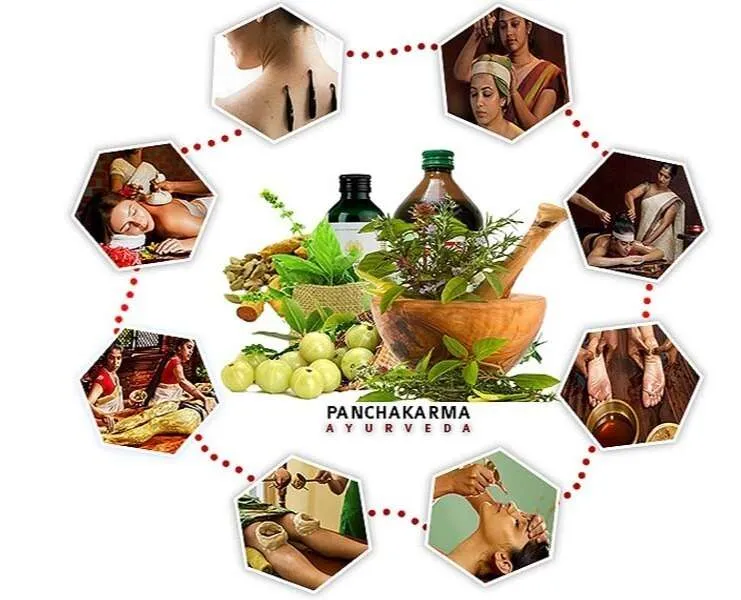
Panchakarma (literally "five actions") is the central therapeutic programme of Ayurveda. It is a gradual, deep detoxification protocol, tailored to each patient's profile. It is not just a wellness break: it is an Ayurvedic medical programme led by doctors trained over many years.
How does a cure help you recover from burn-out?
▸ Eliminating accumulated toxins
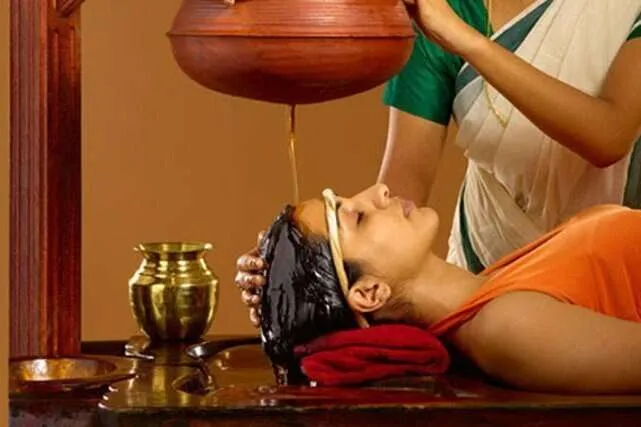
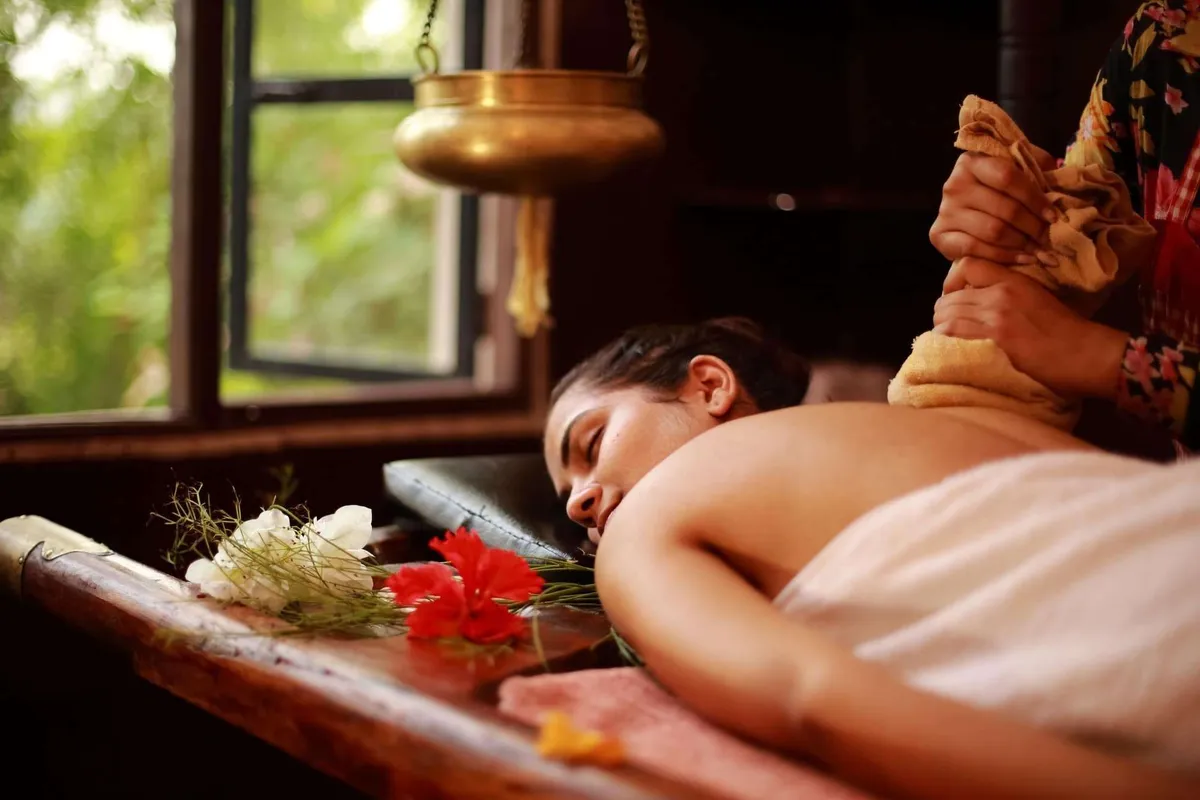
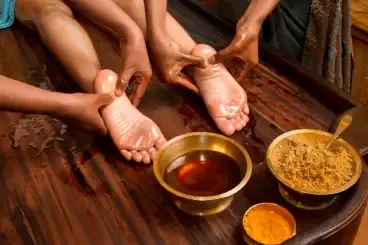
Oil-based treatments (Abhyanga, Shirodhara) and purifying techniques dissolve the ama lodged in the deep tissues.
▸ Restoring the nervous system
Specific treatments nourish and stabilise Vata, calming a nervous system overstimulated by months of overload.
▸ Rebuilding Ojas
Medicated oils, herbal preparations and a suitable diet gradually rebuild the vital essence.
▸ Breaking patterns
Total immersion in a therapeutic environment — far from screens, noise and obligations — allows the nervous system a genuine reset.
4. How long should a cure last to be effective?
The length of a cure depends on the level of exhaustion and the therapeutic goals. In practice, three lengths are commonly recommended:
- 7 days: Introduction to Panchakarma. Allows a first purification and readjustment. Suitable for prevention or for mild accumulated fatigue.
- 14 days: Intermediate programme. Reaches the deeper tissues and begins a real rebuilding of Ojas. Recommended for moderate burn-out.
- 21 to 28 days: Full programme. Ayurvedic tradition considers 21 days the minimum length for significant cellular transformation. This is the cure generally recommended, and more specifically for severe burn-out or associated chronic illnesses.
At our Madhavi Ayurveda centre in Kerala (India), every cure begins with an in-depth consultation with the Ayurvedic doctor to define a personalised protocol. No programme is standardised — that is the essential condition for therapeutic effectiveness.
5. And after the cure? The role of follow-up in Europe

A cure in India only has a lasting effect if it is followed up on your return. Once purified and rebalanced, the body is particularly receptive to lifestyle changes. It is the ideal time to adopt for good:
- A diet suited to your constitution (prakriti)
- Stabilising daily routines (dinacharya)
- Targeted yoga or pranayama practices
- Psycho-emotional support if needed (hypnotherapy, EFT, coaching)
That is precisely why our practice in Geneva, the Espace Thérapeutique Rousseau, offers follow-up after the cure: so that the transformation begun in India takes root in your daily life in Switzerland.
Do you recognise yourself in these symptoms?
The first step is an Ayurvedic assessment consultation, available at our practice in Geneva. Françoise Barrios, Ayurvedic practitioner and director of Madhavi Ayurveda in Kerala, assesses your constitution, identifies the imbalances and suggests a suitable therapeutic programme — whether treatments in Geneva or a cure in India.
In conclusion
Burn-out is a message from the body — a signal that something in the way we live is no longer sustainable. Ayurveda does not try to silence this signal: it tries to understand it, trace it back to its deep causes and restore balance where it has been broken. It is a medicine of the whole person, not just of the symptoms.
In a world where occupational exhaustion has become almost commonplace, regaining lasting vitality is possible — provided you give yourself real, authentic means to do so.
Do you recognise yourself in these symptoms?
The first step is an Ayurvedic assessment consultation at our practice in Geneva. Françoise Barrios, Ayurvedic practitioner, works out with you your constitution, the imbalances at play and the most suitable protocol — a cure in India, follow-up in Geneva, or both.
Françoise Barrios